As part of our long-standing advocacy to advance the rights of Haitian women and girls, the BAI and IJDH are participating in the fourth cycle of the Universal Periodic Review (UPR) – a review conducted every five years by the UN Human Rights Council of the human rights performance of all UN Member States.
Together with 14 other Haitian and solidarity feminist, women’s rights, and human rights organizations, IJDH and the BAI prepared a joint submission detailing human rights violations against women and girls in Haiti over the past five years and offered recommendations for improvement.
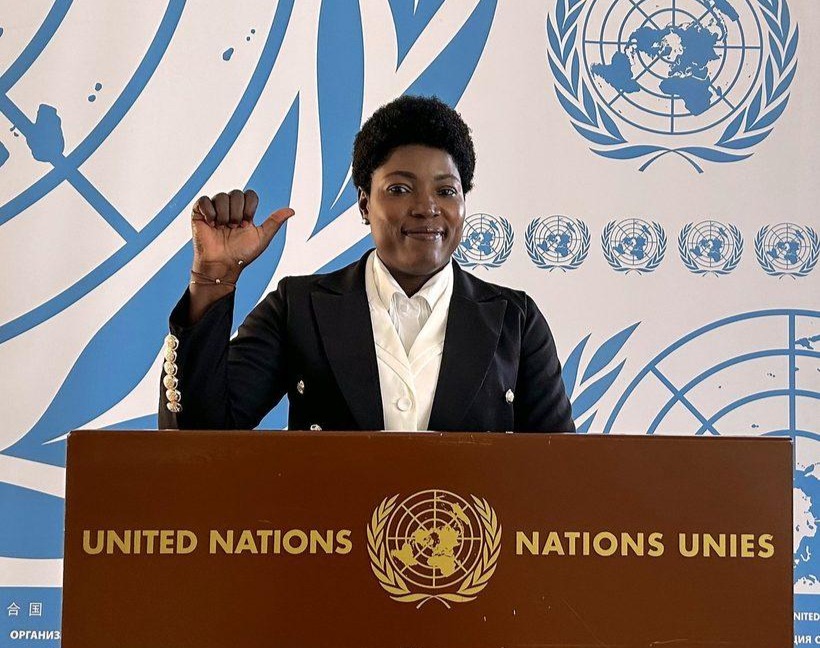
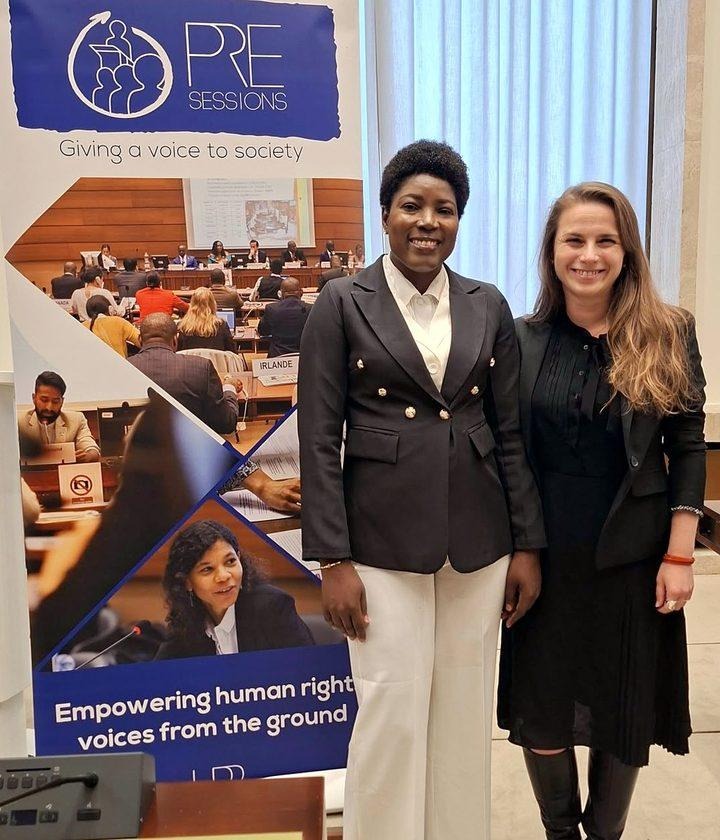
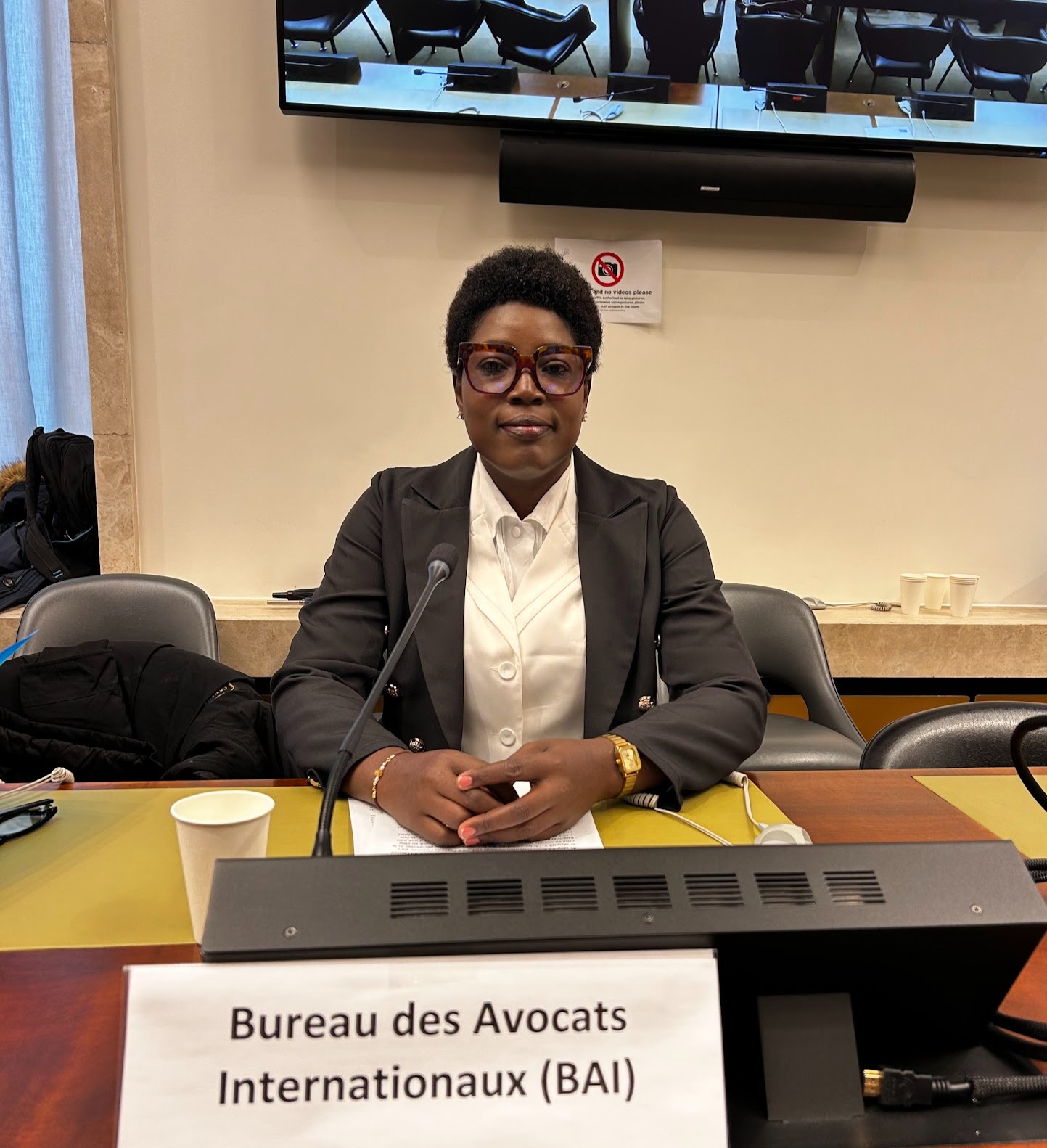
On November 18, 2027, Me Marie Kattia Dorestant Lefruy of the BAI presented at the Pre-Session on Haiti at the UN in Geneva, Switzerland. She and Sasha Filippova of IJDH then spent the week meeting with UN Member States on the Human Rights Council to encourage them to adopt our recommendations during the final stages of the UPR. We also recommended questions that Member States should pose to the Government of Haiti during the formal Sessions in January 2027 in order to expose harms or elicit commitments for responsive action.
What We Are Advocating For
We want the UPR to serve as an opportunity to expose the acute human rights violations against Haitian women and girls and to catalyze responsive action.
The materials prepared by IJDH, the BAI, and our other partners document widespread gender-based violence (GBV) against women and girls, and the underlying inequality and discrimination that drive it. Specifically, Haitian women and girls are living through a crisis of GBV. Armed gangs have weaponized sexual violence, including collective rape: between April and June 2026, just 16 service providers reported an average of 37 cases a day. Survivors find almost no support from the State and rarely obtain justice. This violence is rooted in deep, structural inequality. Women are discriminated against and marginalized in all aspects of public and private life, including education, economic activities, and government. Their distinct needs have been marginalized in policy-making and budgeting. None of the recommendations from the last UPR cycle have been met, and the situation has instead grown considerably worse.
The solution is to urgently implement responsive changes, as specified in our joint recommendations (see below). As Me Kattia concluded at the UN Pre-Sessions, “women’s rights cannot be considered as low priorities in a difficult situation or as ancillary to security responses in this moment of crisis.”
Haiti’s women and girls have a great deal to offer to [their] country and to the world. And securing [their] distinct needs, including by addressing gender-based violence and helping [them] have an equal part in responding to the present situation is not just a matter of respecting [their] rights. It is indispensable to Haiti’s future.
Me Kattia (BAI) at the UPR Pre-Session on Haiti
Our Recommendations
Our full list of recommendations with respect to women’s rights in the context of the UPR – reflecting the input of 16 organizations and extensive consultations – are as follows. Note targeted recommendations on several topics shared with UN Member States in Geneva described below.
- Center women’s rights as a policy and funding priority across all of government and ensure that gender-specific considerations are a core part of all policymaking, including with respect to security, economy, and elections.
- Rigorously implement and enforce laws and policies protecting women and girls from GBV and discrimination. Concurrently modernize outdated laws to align them with international standards of human rights – especially with respect to (i) extending legal protections against all forms of GBV; (ii) legalizing abortion; and (iii) combatting discrimination.
- Include women on an equal and empowered basis in all elements of public life, including especially in leadership positions. Implement and fully fund specific laws, policies, programs, and measures to advance women’s full and equal participation in public life, including elections, by: (i) actively preventing and appropriately sanctioning political violence; (ii) providing financial, logistical, training, and other support for female candidates and public servants; (iii) enforcing and further expanding minimum quotas; (iv) creating an independent monitoring mechanism for implementation; (v) strictly imposing sanctions for noncompliance; (vi) implementing an accessible and robust complaint mechanism; and (vii) investing in education and sensibilization efforts to confront cultural and social biases.
- Ensure and fund adequate protections from, investigation of, and accountability for GBV in all its forms, including SEA, harassment, and domestic violence. Implement rigorous training within the police and judicial workforce to (i) improve understanding of all women’s rights as recognized by international law; (ii) institute continuing education to enculturate respect for women’s rights and safety, and overcome any trivialization or normalization of GBV; (iii) implement and strictly enforce effective protocols for trauma-informed and victim-focused interviews and investigations, including removing unnecessary barriers like medical certificates for reporting; (iv) provide victims and witnesses with protection from retaliation; (v) ensure timely legal proceedings and zealous prosecutions of substantiated cases; (vi) train judges on appropriate sentencing standards, including damage awards for victims who join as civil parties; and (vii) create and fully fund a case management mechanism to support survivors through the judicial process and improve their access to services.
- Implement and fully fund services for GBV survivors, including those who are displaced. These must include medical and psychological care; shelter, livelihoods support, security and protection; and legal recourse. Ensure services are accessible through mobile units and decentralization.
- Prioritize progressive closure of displacement sites through safe, voluntary, and dignified return, relocation, or sustainable local integration. Meantime, ensure that operating sites meet minimum standards of safety, sanitation, privacy, and protection – taking into account gender-specific needs and vulnerabilities. Include women in all aspects of planning, managing, and closing displacement sites; ensure adequate gender-sensitive services, especially for survivors of GBV; and implement rigorous measures to prevent SEA by foreign actors, site managers, and any agents thereof.
- Require institutions to actively dismantle existing barriers, including by (i) implementing independent monitors and safe reporting mechanisms for any instances of sexual harassment, including in schools, work places, and public institutions; (ii) imposing material and public sanctions for violations; (iii) introducing and enforcing quotas as an interim mechanism for improving equity; and (iv) providing targeted support where necessary, including in accessing credit, securing formal title to property, and providing mentorship and other social scaffolding for gender inclusion.
- Invest in robust education and sensibilization campaigns to dismantle negative stereotypes, confront gendered beliefs about social roles, and universalize knowledge regarding women’s rights. Implement comprehensive sex education in schools, including about (i) sexual and reproductive health and rights, (ii) consent and healthy relationships, and (iii) prevention of GBV.
- For all government activities, and specifically for recommendations 1-8, closely and continuously consult with and implement the guidance of Haitian feminist and women’s rights organizations – including those working in rural areas and at the grassroots – in design, implementation, assessment, and modification.
- Provide funding, security, and other institutional support for local organizations working to advance women’s rights and provide related services.
- Hold all government authorities; international actors, including the GSF and MSS; private security; self-defense groups; and armed groups to international human rights standards, and implement effective policies for preventing and addressing human rights violations, including GBV. Establish – and require international actors to establish – independent monitoring, investigations, accountability, and compensation mechanisms. Require rigorous investigations and follow-through for all allegations of GBV by these actors, including any SEA by MSS and GSF personnel.
- Systematically collect and disseminate gender-disaggregated data, taking into account intersecting vulnerabilities like income, disability, age, rural residence, and LGBTQ+ status.
Videos, Documents, and More!
The UPR is a State-driven process: it is States that question the government under review during a formal Session, pose questions, and ultimately issue recommendations that are reflected in the formal outcome report. But civil society is able to influence UPR outcomes by submitting their own reports; participating in Pre-Sessions, where they may present at dedicated plenaries; and working directly with UN Member States to persuade them to adopt the conclusions and recommendations from civil society during the formal Session. We have sought to use each of these mechanisms to secure the rights of Haitian women and girls.
1. Joint submission on women’s rights (July 2026)
In July 2026, a coalition of 16 Haitian and solidarity feminist, women’s rights, and human rights organizations, including IJDH and the BAI, submitted a joint report on the rights of women and girls in Haiti to inform Haiti’s UPR.
Read the submission: English | French
Annex 1 (matrix prepared by the UN Office of the High Commissioner for Human Rights for recommendations issued during the last review cycle with IJDH, BAI, and partners’ comments on implementation status for relevant recommendations)
Annex 2 (list of submitting organizations with descriptions and contact details)
2. Briefing States at the UPR Pre-Session in Geneva (November 18, 2026)
Me Kattia delivered a forceful intervention on behalf of the BAI and the Rezo Fanm BAI, a network of approximately ten Haitian grassroots women’s organizations at the Pre-Session on Haiti at the Palais des Nations in Geneva. Videos of her primary intervention and concluding remarks are below, with links to full text in French (as delivered) and English.
If there is not a concerted effort to ensure that women’s leadership and distinct needs are being adequately considered in responding to the crisis or planning for any elections, the result will be a deeper entrenchment of harms against women and girls.
Me Kattia (BAI) at the UPR Pre-Session on Haiti
3. Joint submission on Haiti’s justice sector and impunity (July 2026)
IJDH and the BAI also submitted a joint report on Haiti’s justice sector and institutionalized impunity together with four other Haitian human rights organizations.
Read the submission: English | French
Annex 1 (matrix prepared by the UN Office of the High Commissioner for Human Rights for recommendations issued during the last review cycle with IJDH, BAI, and partners’ comments on implementation status for relevant recommendations)
Annex 2 (list of submitting organizations with descriptions and contact details)
4. Recommendations and questions we are urging Member States to adopt
We took advantage of our time in Geneva to meet with multiple delegations of Member States that sit on the Human Rights Council. Because it is ultimately their questions and recommendations that will shape the formal outcomes of the UPR, our goal was to persuade them to adopt those we prepared. Given the full scope of our work, these questions and recommendations reflected not just our advocacy on women’s rights, but other human rights issues in Haiti as well.
What Comes Next
Haiti’s review will take place in January 2027 in Geneva. Check back for updates!
Securing [women’s] distinct needs […] is not just a matter of respecting our rights. It is indispensable to Haiti’s future.
Me Kattia (BAI), closing statement at the UPR Pre-Session on Haiti